
 Shai Secunda – Co-Editor
I occupy the Jacob Neusner chair at Bard College, where I am Associate Professor of Religion and teach widely in Jewish studies, about Zoroastrianism, and instruct students in method and theory. My research focuses on the the Babylonian Talmud and the ways in which it incorporates earlier rabbinic texts and echoes of its Sasanian context into a distinct textual archaeology. My interest in context has led me to Zoroastrian literature, where I work primarily on Middle Persian legal texts. It has also engendered an abiding curiosity in Syriac Christianity, Manichaeism, Mandaeism, and late antique Mesopotamian incantation texts – also known as the magic bowls (which lie on the table in front of me in my profile picture, taken a decade ago in Yale’s Babylonian collection). I am also interested in Gender, Orality, and the possibilities of merging capital T Theory with capital P Philology.
I first studied Talmud seriously in a certain black-hat yeshiva located in Baltimore, MD. I later moved to New York City and studied for a Doctorate at Yeshiva University under the direction of Yaakov Elman, z”l. During my second year at YU, I began commuting to Harvard in order to study with the Iranist, P. Oktor Skjaervo. After finishing my coursework at YU, I moved to Israel to study at the Hebrew University of Jerusalem. There, I wrote my dissertation on the development of the laws of menstruation in the Bavli and in corresponding Zoroastrian texts. In the fall of 2007, I returned to the US so I could take up a post-doc at Yale’s program in Judaic Studies. In 2009 I moved back to Israel so I could begin research as a Mandel fellowship at the Scholion Center for Interdisciplinary Jewish Research, and then a Buber fellowship. I have been at Bard since 2016.
In late 2013, I published The Iranian Talmud: Reading the Bavli in its Sasanian Context. My next book, tentatively entitled The Red Fence: Menstruation and Difference in the Talmud and its Sasanian Context, will hopefully be out in 2019.
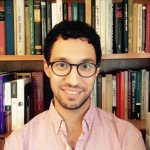 Yitz Landes – Co-Editor
I’m a PhD student in the Religion department at Princeton University. My research focuses on the transmission and reception of classical rabbinic literature in the early middle ages, unpacking the way in which the lives of rabbinic texts can shed light on the spread of rabbinic culture. I also have a strong interest in Jewish liturgy and ritual, topics I addressed in my first book, Studies in the Development of Birkat ha-Avodah (Jerusalem: The Mandel Institute for Jewish Studies, 2018 [Hebrew]). Prior to studying at Princeton, I received a BA in Talmud and Halakha and Religion and an MA in Talmud and Halakha from the Hebrew University of Jerusalem. At the Hebrew University, I was a fellow in the Jack, Joseph and Morton Mandel School for Advanced Studies in the Humanities and participated in the Program for the Study of Late Antiquity and Its Heritage.
Yakov Z. Mayer – Editor of Hebrew Content
My name is Yakov Z. Mayer, I am married to Irit and father to Hillel. I currently live in Tel-Aviv. I completed my BA and MA at the Hebrew University. My MA thesis was dedicated to three exegetical works of the Admo”r R. Yitzchak Isaac Safrin of Komarno, one on the Sifra, another on Yerushalmi Sheqalim, and the third on Mishnah Kinnim. Through an analysis of these works I attempted to describe the lamdanut that developed in a Hassidic beit midrash in the 18th century. I am currently at work on a PhD at Tel-Aviv University. My dissertation is entitled “Aspects of the Reception History of the Palestinian Talmud in the Early Modern Period.” In this study I return to the 16th century, to the original printing of the Yerushalmi in Venice in 1522-23, and to the processes of reworking, commentary, legal decision making, collection of sources, editing, cataloging and adaptation of the Yerushalmi to more familiar structures (a process generally referred to by scholars as “Bavlization”) which took place during the 16th and 17th centuries.
Outside of the university I teach at “Alma- Home for Hebrew Culture” in Tel-Aviv as well is in other batei midrash and write the parshat hashavua column in the Literature and Culture section of Ha’aretz.
 The Talmud Blog